CCTV Blind Spots –
Commercial premises are constantly evolving. New shelving is installed, production lines are moved, offices are reconfigured and warehouses adapt to changing stock levels. These operational changes help businesses grow, but they can unintentionally reduce the effectiveness of an existing CCTV system.
One of the most common assumptions made by businesses is that because the CCTV system was professionally installed several years ago, it will continue to provide the same level of coverage regardless of how the premises change. In reality, even relatively small alterations can introduce blind spots that remain unnoticed until footage is needed following an incident.
A typical example is warehouse storage. Additional pallet racking is often introduced as stock levels increase, but the new layout may block camera views that were previously clear. Areas that were once fully visible can become hidden behind shelving, leaving loading bays, fire exits or walkways outside the camera’s field of vision.
Retail premises experience similar challenges. Seasonal displays, promotional stands and relocated shelving can obstruct important sight lines, particularly around entrances, high-value stock or self-service areas. Whilst these displays may only be intended as temporary features, they often remain in place for months.
Office environments also evolve. Glass partitions become solid walls, collaborative workspaces replace individual offices and reception areas are redesigned to improve customer experience. Every structural change has the potential to affect CCTV coverage, particularly where cameras were positioned to monitor open-plan layouts.
Manufacturing businesses regularly introduce new machinery or production equipment. Whilst these investments improve efficiency, they may create visual obstructions or alter traffic routes through the building. Forklift movements, pedestrian walkways and loading areas can all change over time, meaning camera positions that were once ideal may no longer provide the most useful coverage.
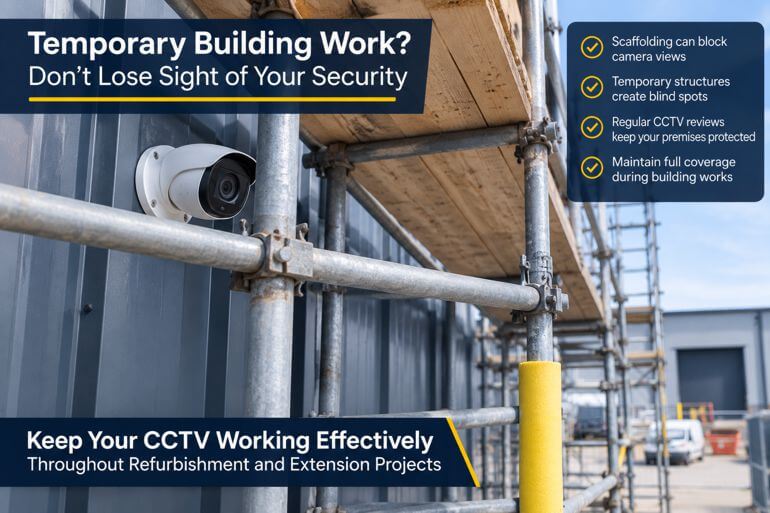
External areas deserve equal attention. Many businesses install temporary storage containers, welfare cabins, generators or contractor compounds during refurbishment projects. These structures can obscure cameras overlooking car parks, service yards and perimeter fencing, reducing visibility at precisely the time when site activity has increased.
Landscaping can have a similar effect. Trees, shrubs and climbing plants naturally grow over time, gradually reducing the field of view without attracting immediate attention. A camera that originally overlooked an entrance gate may eventually be partially hidden behind vegetation, particularly during the summer months.
One advantage of modern IP CCTV systems is their flexibility. Cameras can often be repositioned, additional units integrated and recording layouts updated without replacing the entire system. This allows surveillance to develop alongside the business instead of remaining fixed to the original building layout.
Routine CCTV reviews should therefore form part of wider facilities management rather than only taking place after a security incident. Walking the premises whilst comparing current layouts against live camera views often reveals coverage gaps that would otherwise go unnoticed.
Business expansion provides another opportunity for review. Companies opening additional offices, extending warehouses or creating customer collection points should consider whether their surveillance strategy still reflects how the premises operate today rather than how they functioned several years earlier.
The objective is not simply to record criminal activity. Effective CCTV should provide clear operational visibility, support health and safety investigations, assist with incident management and help protect staff, visitors and contractors across the entire site.
Professional installers can identify developing blind spots before they become significant problems. Small adjustments to camera positioning frequently restore full coverage without major disruption, while additional cameras can be incorporated where operational changes make them necessary.
For businesses throughout Halifax, CCTV should be regarded as a dynamic system that evolves with the organisation. As buildings change, surveillance should change with them. Regular reviews following operational alterations ensure cameras continue protecting the areas that matter most, maintaining both security and the long-term value of the original investment.