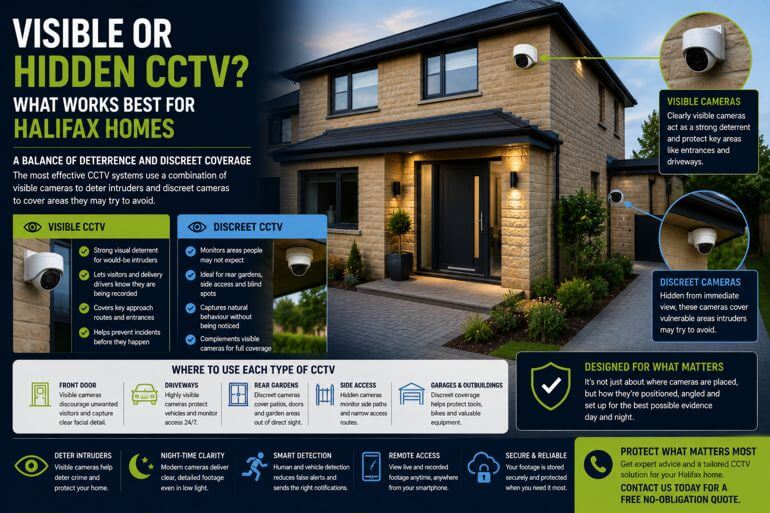
Visible vs Hidden CCTV –
One of the most common questions homeowners ask when installing CCTV is: should cameras be clearly visible, or hidden from view?
There are arguments for both approaches, but in most domestic properties, the best solution is usually a balance between visible deterrence and practical coverage.
For Halifax homeowners, understanding the difference can help create a CCTV system that not only records incidents effectively, but also discourages them from happening in the first place.
What is the purpose of visible CCTV?
Visible CCTV acts primarily as a deterrent.
A clearly seen camera sends a message that:
- The property is protected
- Activity is being monitored
- Footage is being recorded
Most opportunistic intruders prefer easy targets. If they see obvious CCTV coverage, they are more likely to move on rather than risk identification.
This is why visible cameras remain highly effective in residential areas across Halifax.
Why hidden CCTV is sometimes used
Hidden or discreet CCTV has a different purpose.
It is typically used when:
- You want to monitor behaviour naturally
- You do not want cameras to dominate the appearance of the property
- You want secondary coverage that intruders may not notice
Discreet cameras can also be useful in:
- Rear garden areas
- Side access routes
- Detached garages or workshops
Are hidden cameras better for catching intruders?
Not necessarily.
A hidden camera may capture footage of an incident, but it:
- Does not act as a strong deterrent
- Does not discourage entry attempts beforehand
Visible systems are often more effective because they help prevent incidents rather than simply recording them afterwards.
What is the best approach for homes in Halifax?
For most domestic properties, the ideal setup is:
1. Visible primary cameras
Positioned to:
- Cover entrances
- Monitor driveways
- Be clearly noticeable from approach routes
These provide deterrence and obvious protection.
2. Secondary discreet coverage
Additional cameras may be positioned more subtly in:
- Rear gardens
- Side paths
- Blind spots
This ensures continued coverage if someone attempts to avoid the obvious cameras.
Does camera positioning matter more than visibility?
Absolutely.
Even highly visible cameras are ineffective if:
- Positioned too high
- Poorly angled
- Unable to capture identification detail
The best CCTV systems prioritise:
- Facial recognition quality
- Coverage of vulnerable routes
- Reliable night-time performance
What about aesthetics?
Many Halifax homeowners are concerned about cameras affecting the appearance of their property.
Modern CCTV cameras are:
- Smaller and cleaner in design
- Available in compact turret or dome styles
- Much less intrusive than older systems
This means cameras can remain visible without looking industrial or excessive.
Should dummy cameras ever be used?
Generally, no.
Dummy cameras:
- Provide no evidence
- Offer no real protection
- Can often be identified easily
A properly installed real system is always preferable.
Are visible CCTV cameras enough on their own?
CCTV is most effective when combined with:
- Good lighting
- Strong locks
- Burglar alarms where appropriate
This layered approach provides significantly stronger security overall.
Final Answer: Should CCTV cameras be visible or hidden?
For most homes in Halifax:
- Visible cameras are best for deterrence
- Discreet cameras can support coverage in vulnerable areas
The most effective CCTV systems use a combination of both, ensuring:
- Intruders know the property is protected
- Blind spots are still covered
- High-quality footage is captured if needed
Ultimately, positioning and system design matter far more than simply trying to hide cameras completely.